In the previous part we learned the staff and used the treble clef to find where the notes go.
Now we will take a closer look at what a clef actually does and learn one more clef: the bass clef.
What is a clef?
Look at this staff. There is a note - but which note is it?
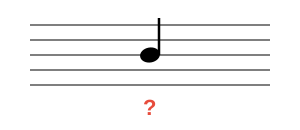
It is actually impossible to tell - we need a clef!
A clef is a symbol at the beginning of the staff that tells us which note is on which line. Without a clef it is just five lines - we have no idea what the note is called.
The Treble Clef
In the previous part we used the treble clef to find the notes' positions on the staff. Let us review!
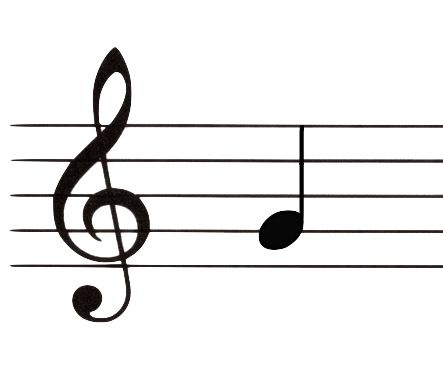
The treble clef curls around the second line from the bottom. This shows that a note on that line is G.
From there we can figure out where all the other notes are, just as we did in Part 2.
The Bass Clef
The second most common clef is called the bass clef.

The bass clef's two dots sit on either side of the fourth line from the bottom (the second line from the top). This shows that a note on that line is F.
It works the same way as the treble clef. The clef gives us a reference point and from there we can figure out where all the other notes are.
Question: F is on the fourth line in bass clef. Which note is one step down, in the space below F?
Show answer
Answer: E. E comes right before F in the order of notes (C D E F G A B).
The clef determines the notes
Look at what happens if we place a note on the same position, but with different clefs:
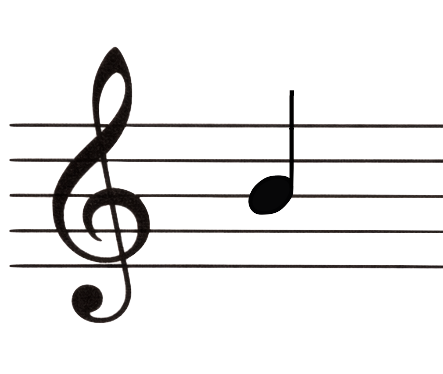
With treble clef: B

With bass clef: D
The note stays in exactly the same position, but depending on which clef we use, that position gets a different note name.
With the treble clef the note is B. With the bass clef it is D.
That is why the clef is so important. It helps us know which notes belong to the lines and spaces.
Treble clef and bass clef together
Sometimes you see the treble clef and bass clef at the same time. This is common in piano music, where the music is written on two staves.

The right hand usually plays what is written in the treble clef and the left hand plays what is written in the bass clef.
Here you can see how the notes in the two clefs correspond to keys on the piano:
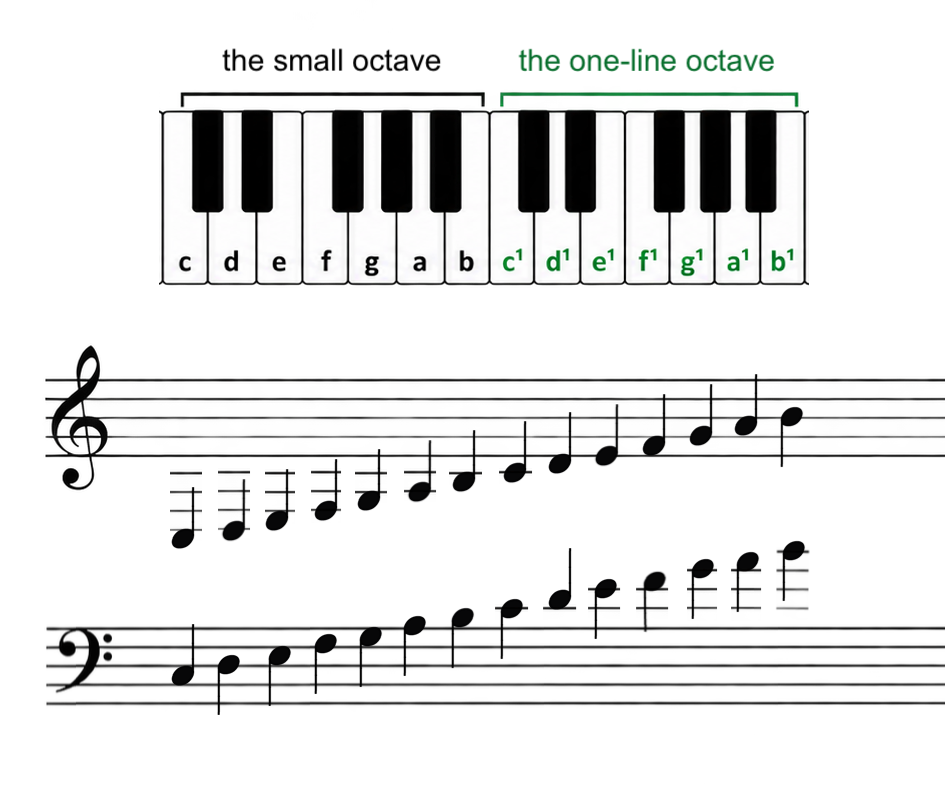
Look at the lowest notes in the image. In the bass clef they sit comfortably on the lines, but in the treble clef you would need very many extra lines below the staff. Those extra lines are called ledger lines. Ledger lines are short extra lines that are added when a note does not fit on the five regular lines. It works, but becomes hard to read if there are too many. That is why it is practical to have different clefs - so that the notes usually end up on the regular lines.
Frequently asked questions about the bass clef
Why is the bass clef called the F clef?
The two dots of the bass clef sit on either side of the fourth line from the bottom, and a note on that line is F. From F you can find all the other notes step by step.
How do you remember the notes in the bass clef?
The lines from the bottom up are G, B, D, F and A - often remembered as "Good Boys Do Fine Always". The spaces from the bottom up are A, C, E and G - "All Cows Eat Grass".
What is the difference between the treble clef and the bass clef?
The treble clef is used for higher notes and the bass clef for lower notes. The same position on the staff gets different note names - the middle line is B in treble clef but D in bass clef.
Where is middle C in the bass clef?
Middle C sits just above the bass clef staff on a ledger line. In the treble clef it sits just below the staff, so middle C connects the two clefs in piano music.
Practice reading notes in the bass clef exercises or the treble clef exercises.
Well done!
Now you know two clefs! You understand how both the treble clef and the bass clef work, and you have seen that the clef determines which notes belong to the lines and spaces on the staff.
There are plenty of matching exercises to do now!